
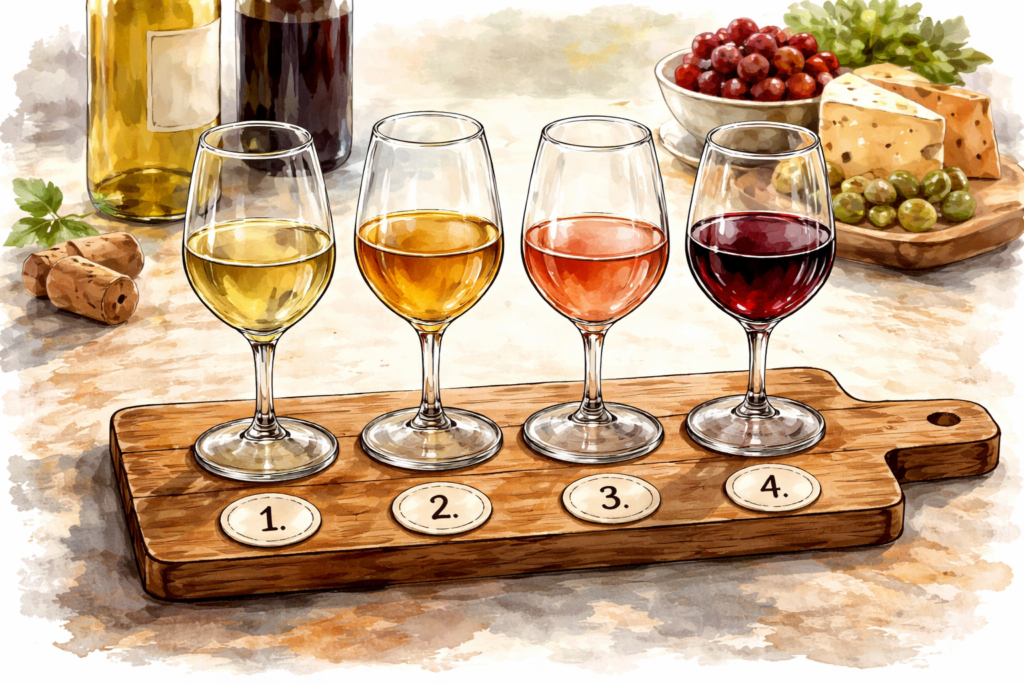
Before you smell or taste anything, wine is already giving you information. Most people skip this step, but a quick look can quietly tell you a lot about what’s coming next.
This isn’t about judging quality yet. It’s about setting expectations. A pale wine and an inky one are asking very different things of your palate, and noticing that early helps everything else make more sense.
This is the first step in the tasting structure I use, based on the Wine & Spirit Education Trust Systematic Approach to Tasting — and it was also the starting point of my own wine journey.
Start with clarity (keep it simple)
The first thing I notice is whether the wine looks clear or cloudy.
Most wines you’ll encounter should be clear. If a wine looks hazy, it doesn’t automatically mean something is wrong. Some wines are unfiltered on purpose. Others may have been handled roughly or stored poorly.
At this stage, you’re not deciding if the wine is good or bad — you’re just noticing what’s there.
Clear or not?
That’s enough for now.
Color and intensity matter more than people think
Next, I look at color and how deep it is.
Color can hint at:
- Grape type
- Age
- How the wine was made
A very pale white often feels lighter and fresher. A deeper gold or amber white usually signals age, oak, or richness. With red wine, lighter colors tend to feel fresher and softer, while darker wines often come with more structure.
I usually tilt the glass slightly and look against something white. It doesn’t need to be formal — a napkin works just fine.
Again, this isn’t judgment. It’s context.
What about legs?
Legs — the streaks that form on the inside of the glass — get a lot of attention, and honestly, more credit than they deserve.
They don’t tell you about quality.
They mostly point to alcohol and sugar levels.
That’s it.
If you notice them, great. If you don’t, you’re not missing anything important.
Bubbles and sediment (no drama)
If the wine is sparkling, bubbles are part of the experience. Their size and persistence can hint at style, but you don’t need to analyze them deeply to enjoy the wine.
Sediment, especially in older red wines, is normal. It’s often just color and tannin settling out over time. It doesn’t mean the wine is flawed — it just means it’s had time to evolve.
Why this step matters
Appearance doesn’t tell you everything, but it sets the tone.
A pale, delicate-looking wine prepares you for freshness and lift.
A dark, dense wine prepares you for weight and structure.
When your expectations line up with what’s in the glass, tasting becomes clearer and more enjoyable.
A book that helped this click for me
When I first started taking wine seriously, this step felt almost too simple. But it was also the one that changed how I approached everything else.
One of the first resources that really helped this make sense for me was this guide from WSET:
👉 Wine Folly: The Master Guide
It eventually became part of my master guide for tasting — not because it’s flashy, but because it’s clear, structured, and practical. Looking back, it was a great starting point for my wine journey, and I still come back to it when I want to reset and taste more thoughtfully.
How I actually use this step
I don’t linger here. A few seconds is enough.
I look.
I take a mental note.
Then I move on.
But skipping this step often leads to confusion later. When a wine feels “off,” it’s usually because expectations weren’t set from the start.
Coming up next
In the next post, I’ll move on to the nose — how to smell wine without guessing, overthinking, or feeling silly about what you’re picking up.
Wine Tasting Series