
People love to say vodka has no flavor. That idea misses the point.
Vodka may be legally neutral, but it still delivers texture, weight, heat, and balance. Those qualities come from how producers choose ingredients, distill, filter, and dilute the spirit. Once you understand the process, vodka stops feeling interchangeable.
What Vodka Is
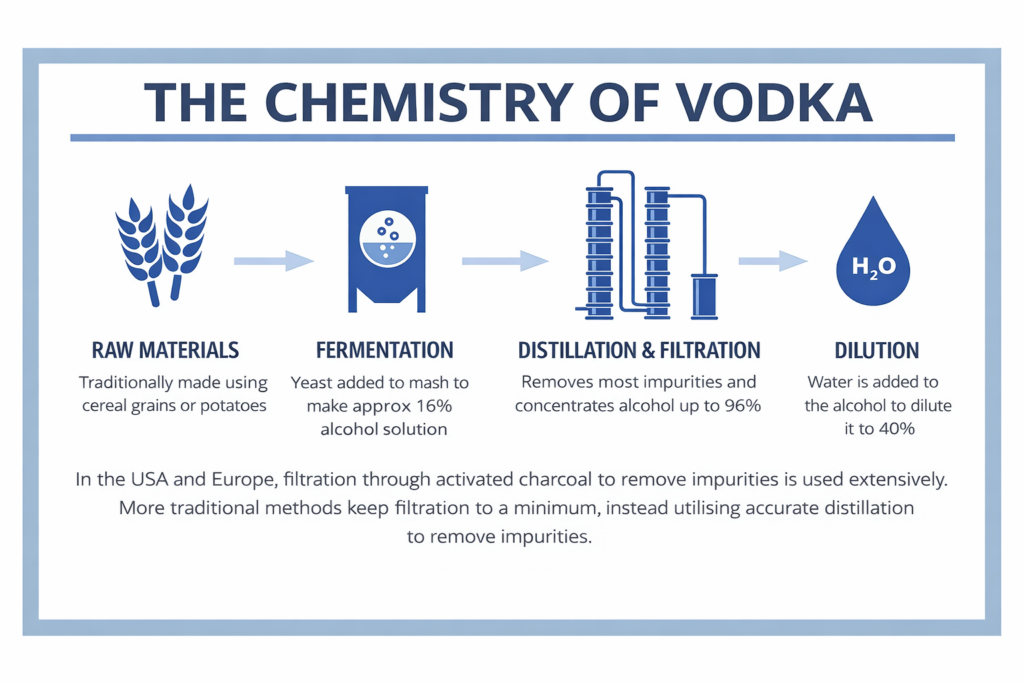
Producers distill vodka to a very high proof—typically around 95–96% ABV—then dilute it with water to bottling strength. Regulations aim for neutrality, but neutrality doesn’t erase identity. Every production choice leaves a fingerprint.
How Vodka Is Made
Vodka begins with a fermentable base such as wheat, rye, corn, potatoes, rice, or grapes. After fermentation, distillers run the liquid through column stills or, less commonly, pot stills. Some producers distill multiple times to achieve extreme purity, while others stop earlier to preserve texture.
Many vodkas undergo filtration—often through charcoal—to smooth harsh edges. Finally, producers dilute the spirit with water, a step that dramatically affects mouthfeel and finish.
Why Vodka Tastes Different
Vodka expresses itself through:
- Weight on the palate
- Smoothness versus sharpness
- Perceived heat
- Length of finish
Once you start tasting for those elements, vodka becomes intentional rather than invisible.
Russian and Eastern European Vodka: Bold, Structured, and Traditional
In Eastern Europe, vodka doesn’t disappear into cocktails. It stands on its own.
This style emphasizes strength, clarity, and structure, not softness.
How It’s Made
Producers commonly use rye or wheat and avoid excessive filtration. Rye-based vodkas deliver spice and dryness, while wheat versions soften slightly but still finish firm. Distillation stays clean, but not so aggressive that texture disappears.
How It Drinks
This vodka is meant to be:
- Served ice-cold
- Consumed neat
- Paired with food
A touch of heat is expected. The spirit cuts through salt and fat, refreshing the palate between bites.
Why This Style Matters
Russian and Eastern European vodka proves vodka can be assertive and purposeful. It values tradition, structure, and honesty over smoothness.
American Vodka: Smooth, Neutral, and Built for Cocktails
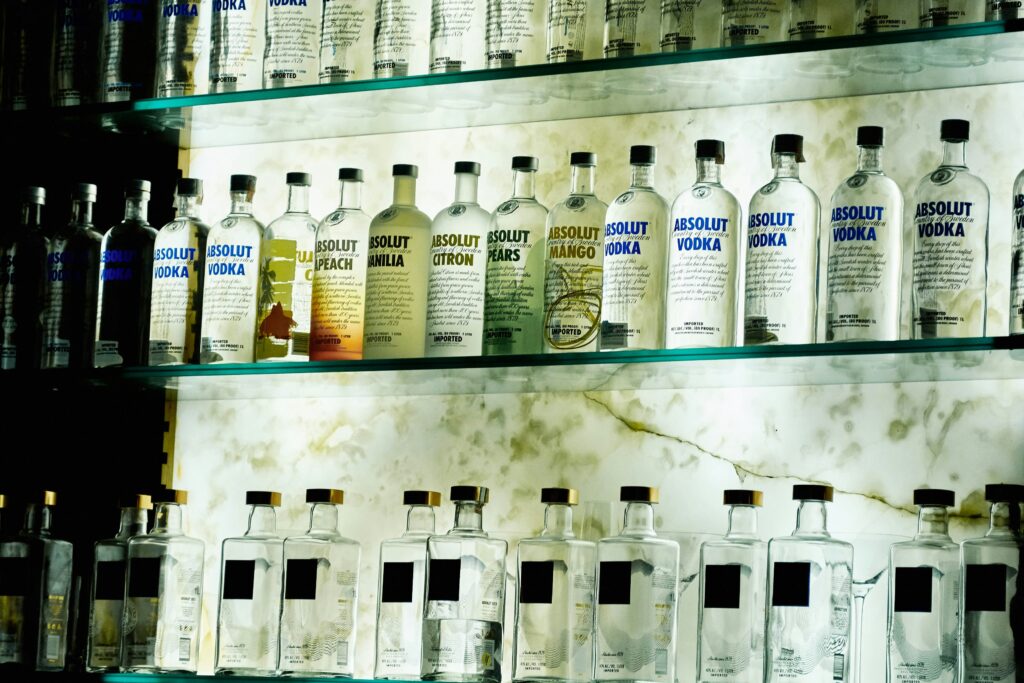
American vodka follows cocktail culture.
Instead of designing vodka for sipping, producers focus on clean neutrality and consistency behind the bar.
How It’s Made
Most American vodkas use corn or wheat, undergo multiple distillations, and receive heavy filtration. Corn-based vodkas often feel slightly sweet and round, while wheat-based versions lean crisp and dry.
Why Bartenders Use It
American vodka stays out of the way. It works seamlessly in:
- Martinis
- Cosmos
- Espresso Martinis
- Highballs
Consistency and mixability make it a staple in cocktail programs.
The Trade-Off
Extreme smoothness can flatten character. American vodka succeeds by being reliable rather than expressive—and that reliability is often the goal.
Japanese Vodka: Precision, Balance, and Mouthfeel
Japanese vodka treats neutrality as a design choice, not an absence of care.
Producers focus on balance, cleanliness, and texture, borrowing philosophy from Japanese cuisine and spirits.
How It’s Made
Many Japanese vodkas use rice and ferment with extreme precision. Soft water plays a central role, creating a gentle, flowing mouthfeel that defines the final spirit.
How It Feels
Japanese vodka:
- Feels silky rather than sharp
- Finishes clean
- Avoids aggressive heat
It earns attention through restraint.
How It’s Used
This style shines in minimalist cocktails, refined Martinis, and food-forward programs where texture matters as much as flavor.
Next: Russian and Eastern European Vodka: What Makes It Different and Why People Care