
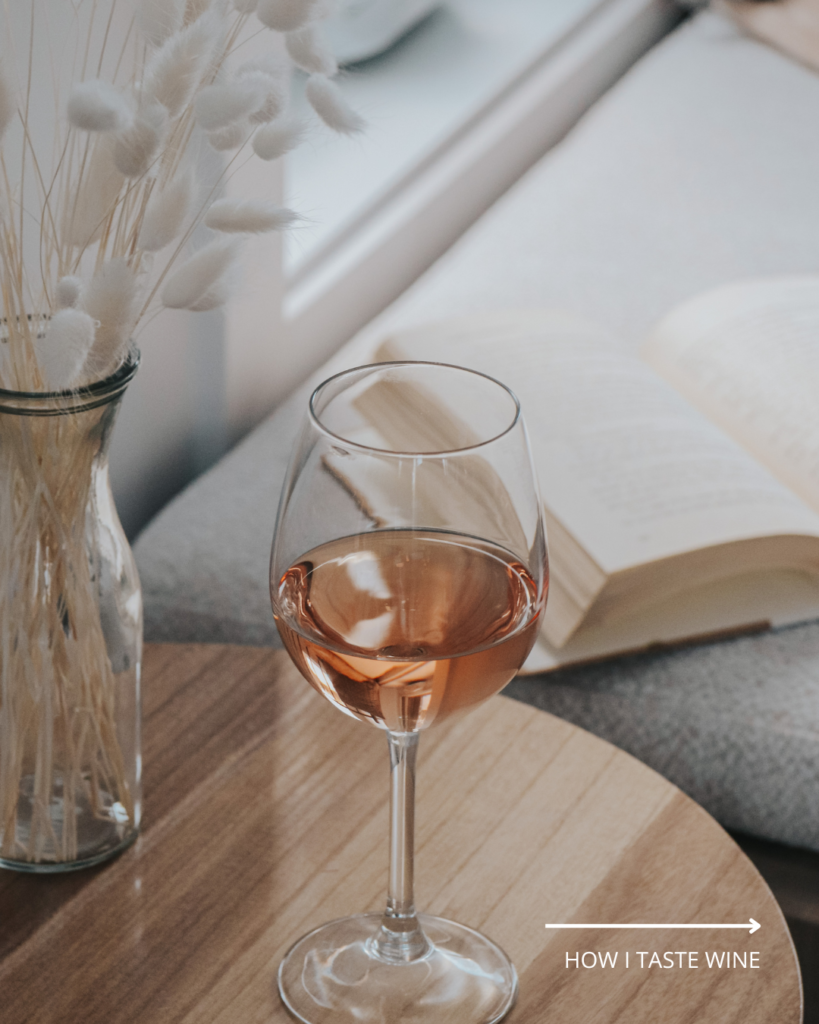
Wine tasting doesn’t have to feel mystical or intimidating. You don’t need a perfect palate, and you definitely don’t need to pretend you smell things like wet tennis balls.
Most of the time, wine smells more like things people actually recognize — stone after rain, wet clay, fresh fruit, herbs, wood. Things you’ve already experienced, even if you’ve never put words to them.
What really helps isn’t having the “right” descriptors — it’s having structure. A simple way to slow down, pay attention, and understand what you’re actually tasting in the glass.
That’s why I lean on the Wine & Spirit Education Trust Systematic Approach to Tasting, even when I’m tasting casually. Not because I’m trying to be academic, but because it keeps me focused. It helps me listen to the wine before I decide how I feel about it.
Why structure matters (even if you’re just drinking for fun)
Most people are already tasting wine — they just don’t have a framework for it. Without one, tasting turns into quick reactions:
“I like this.”
“This feels sharp.”
“This one feels heavy.”
Those reactions aren’t wrong, but they don’t tell the full story. Structure helps slow things down and asks a better question: why does it feel that way?
Instead of reacting right away, you start noticing:
- Is this wine light or full?
- Is it refreshing because of acidity, or just cold?
- Does it disappear quickly, or does it stay with you?
Structure doesn’t take the fun out of wine. It helps you understand why you enjoy something — or why you don’t.
The idea people get wrong about “formal tasting”
A lot of people think structured tasting is only for exams or professionals. I don’t see it that way.
Structure is most helpful when you don’t know what you’re drinking. It keeps you from jumping to conclusions and helps separate personal taste from how well a wine is made.
You can dislike a wine and still see that it’s solid. You can enjoy a simple bottle and understand why it works. Structure gives you that clarity.
The four steps (at a high level)
The WSET approach breaks tasting into four simple steps. No deep dive yet — just the outline.
- Appearance
What the wine looks like. Color, depth, clarity. This sets expectations, not judgment. - Nose
What you smell. Fruit, non-fruit, how strong it is, and whether it smells clean. - Palate
How it tastes and feels. Sweetness, acidity, tannin, alcohol, body, and finish. - Conclusions
Stepping back and asking: Does this feel balanced? Is it enjoyable? Does it feel complete?
That’s it. No tricks. No secret language.
A quick note on tools
If you want to practice tasting this way at home, glassware actually makes a difference. A clear, tulip-shaped glass helps focus aroma and makes structure easier to notice.
I tend to use simple, versatile universal wine glasses like these:
👉 Libbey Master’s Reserve Prism All Purpose Wine Glasses Set
They’re not too fancy — they just work, which is really the goal.
How I actually use this day to day
I don’t always run through every step in my head. Sometimes it’s quick. Sometimes it’s loose. But the order stays the same.
I look first.
I smell before I sip.
I pay attention to structure before flavor.
That alone changes how much you get out of a wine.
This approach also shows up every day in real service. At the restaurant I’m currently at, Pink Ivy Kitchen + Bar, we build our wine program using familiar grape varieties — just from different parts of the world.
Understanding structure is what makes that possible.
When you know how a wine behaves — its acidity, body, and balance — you stop worrying about labels and start thinking about how it will work at the table. A wine doesn’t need to come from the expected place to pair well with food. It just needs to play the right role.
That’s something I never would have imagined earlier on. Seeing the same grape grown halfway across the world fill the same role — sometimes even better — completely changed how I think about wine.
This is my open notebook
I’m currently studying to become a sommelier, and this series is part of that process. Think of it as a shared notebook — learn with me.
Some posts will feel more settled. Others will be learning in real time. Seriously, wine is too big to pretend there’s a finish line.
What’s coming next
Over the next few posts, I’ll break each step down the way I actually use it — practical, straightforward, and useful whether you’re studying or just trying to drink better wine.
No pressure.
No tasting theater.
Just a clearer way to understand what’s in your glass.
Some links in this post are affiliate links.
Wine Tasting Series