
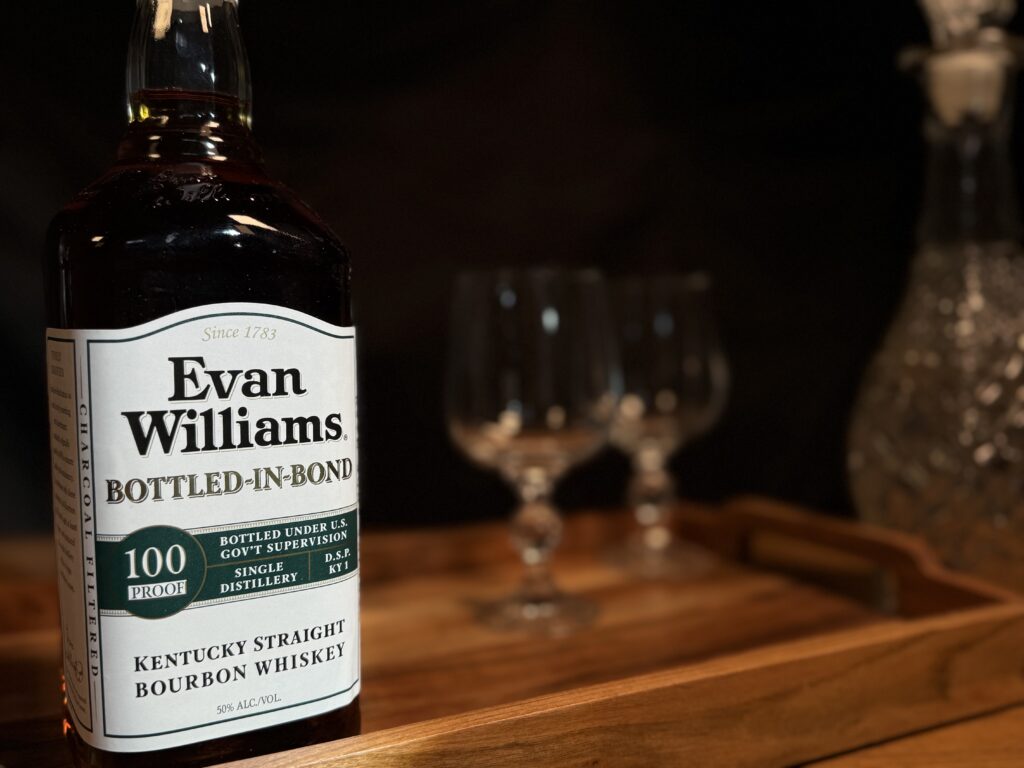
Tuesday night at Pink Ivy, a couple in their fifties slides onto barstools after dinner. The woman points to our bourbon shelf and asks the question I’ve heard a thousand times: “What’s the difference between all these bottles?” Her husband adds, “They all look the same to me.”
I glance at our back bar—forty-seven different bourbons, each label shouting different numbers, terms, and claims. Bottled in bond. Barrel proof. Single barrel. Straight bourbon whiskey. Small batch. Four years. Ten years. No age statement.
I realize something: the bourbon industry has created a secret language, and they’ve handed you the bill without teaching you how to read it.
Why Bourbon Labels Are So Confusing
Here’s the uncomfortable truth: bourbon labels are designed to sell you bottles, not educate you. Distilleries pack labels with terminology that sounds impressive, but half the time, even experienced bartenders can’t explain what it all means.
Age statements, proof numbers, mash bill percentages, legal designations—it’s a maze of jargon that makes you feel like you need a law degree just to pick a bottle.
But you don’t. You just need someone to translate the bourbon label language.
Essential Bourbon Label Terms Every Drinker Should Know
What Does Proof Mean on Bourbon Bottles?
Proof is the most important number on any bourbon label. It’s simple math—proof is twice the alcohol percentage. An 80 proof bourbon is 40% alcohol. A 100 proof bourbon is 50% alcohol.
But here’s what distilleries don’t tell you: proof isn’t just about strength, it’s about flavor intensity and price point.
Standard Proof Bourbon (80-95 proof)
These are approachable, smooth bourbons that won’t burn your palate. This is where beginners should start:
- Buffalo Trace (90 proof)
- Maker’s Mark (90 proof)
- Evan Williams (86 proof)
High Proof Bourbon (100-120+ proof)
These are barrel proof, cask strength, or hazmat bottles (anything over 140 proof can’t fly because it’s literally considered hazardous material). They’re intense, concentrated, often diluted with water before drinking:
- Stagg Jr.
- Booker’s
- Wild Turkey Rare Breed
Pro tip: Higher proof usually means higher price, but it doesn’t always mean better bourbon. I’ve served $30 bottles at 100 proof that drink better than $80 bottles at the same strength.
Bourbon Age Statements Explained: Why Age Isn’t Everything
Age statements tell you how long bourbon aged in the barrel. Sounds straightforward, right? Yes. But also no.
By law, bourbon has no minimum aging requirement unless it’s labeled “straight bourbon,” which requires at least two years. Most bourbon you’ll find has been aged between four and twelve years.
Here’s the marketing game: if a bottle doesn’t list an age statement, it’s usually younger bourbon. They’re not hiding eight-year whiskey—they’re hiding two- or three-year whiskey.
Does Older Bourbon Taste Better?
High-end bottles shout their age: twelve years, fifteen years, twenty-three years. Budget bottles stay quiet. But—and this is critical—older doesn’t always mean better bourbon.
Bourbon can be over-aged. Past a certain point in Kentucky’s hot warehouses, you’re drinking oak furniture, not whiskey. Some of the best bourbons I’ve tasted were six to eight years old. Some of the worst were pushing twenty.
At Pink Ivy, that couple asked about Pappy Van Winkle, the most hyped bourbon in America. It’s aged fifteen to twenty-three years depending on the expression. But I’ve done blind tastings where people preferred Weller Antique—a $35 bottle with no age statement—over Pappy.
Age is part of the bourbon story, not the whole story.
What Does “Straight Bourbon Whiskey” Mean?
If a bottle says “straight bourbon whiskey,” it means two things:
- It’s been aged at least two years
- If it’s under four years old, the age must be stated on the label
That’s the legal requirement. But “straight bourbon” has become a signal of quality because it separates serious bourbon from flavored whiskeys, blended products, or young craft distillery experiments that haven’t had time to mature.
When someone asks me for a “real” bourbon, I point them toward anything labeled “straight bourbon whiskey.”
Bottled in Bond Bourbon: The Best Value Secret
This is the bourbon term I wish more people understood. Bottled in bond is a legal designation from the Bottled-in-Bond Act of 1897, and it guarantees four things:
- Aged at least four years
- Bottled at exactly 100 proof
- Product of one distillation season from one distillery
- Aged in a federally bonded warehouse
Why Bottled in Bond Matters
It was created to protect consumers from adulterated whiskey. Today, it’s a mark of quality and consistency.
Best bottled in bond bourbon values:
- Evan Williams Bottled in Bond ($15-$20)
- Old Grand-Dad Bottled in Bond ($20-$25)
- Heaven Hill Bottled in Bond ($15-$20)
You’re getting a four-year, 100-proof whiskey backed by federal standards for $15 to $25. These are some of the best values in bourbon.
I keep bottled-in-bond bourbons on my rail at Pink Ivy because they’re reliable, affordable, and they drink like they cost twice as much.
Single Barrel vs Small Batch Bourbon: What’s the Difference?
Single barrel bourbon means the bourbon came from one barrel, not blended with others. Small batch bourbon means it’s a blend of a limited number of barrels.
Here’s the problem: “small batch” has no legal definition. It could be ten barrels. It could be a thousand barrels. Distilleries use the term however they want.
Should You Buy Single Barrel Bourbon?
Single barrel bourbons are genuinely unique—each barrel tastes different because of its location in the warehouse, the wood characteristics, the aging environment. But that also means inconsistency. One barrel of Blanton’s might be incredible; the next might be just fine.
At the bar, I tell customers that single barrel is interesting for exploration, not reliability. If you want the same experience every time, buy a blended bourbon. If you want adventure, go single barrel.
What Is Mash Bill in Bourbon?
Mash bill is the grain recipe: the percentage of corn, rye, wheat, and malted barley that goes into bourbon. By law, bourbon must be at least 51% corn. The rest is up to the distiller.
High-rye bourbons have more rye in the mash bill, which adds spice. Wheated bourbons use wheat instead of rye, which makes them softer and sweeter.
But here’s the reality: unless you’re a professional taster, you’re not identifying mash bill percentages by flavor.
Four Roses has five different mash bills. Heaven Hill uses multiple recipes. But most drinkers can’t tell the difference between a 20% rye mash bill and a 30% rye mash bill in a blind tasting.
It’s interesting trivia, but it’s not practical information for buying bourbon.
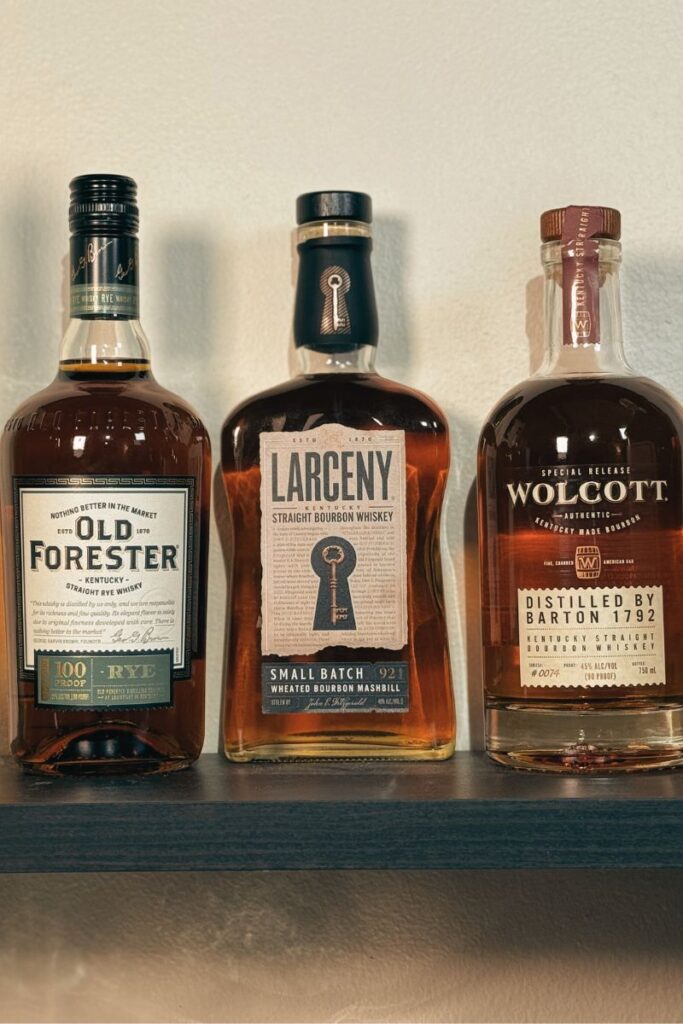
The Night I Realized I Was Making Bourbon Too Complicated
Two years ago, a regular at Pink Ivy asked me to recommend a bourbon for his father’s birthday. Big milestone—something special. I immediately started rattling off terms: barrel proof, single barrel, age statement, wheated mash bill.
His eyes glazed over. He stopped me and said, “Man, I just want to know which one tastes good and won’t bankrupt me.”
I’d become the problem. I was speaking the industry’s language, not his.
I grabbed a bottle of Elijah Craig Small Batch—no fancy designation, 94 proof, no age statement listed, $30. I poured him a taste. He loved it. He bought the bottle. His dad loved it.
I learned that night that my job isn’t to impress people with terminology—it’s to help them find bourbon they enjoy.
Now when someone asks about the shelf, I skip the jargon. I ask what they like to drink, what they’re spending, and whether they want smooth or bold. Then I hand them a glass. The label can come later.
How to Choose Bourbon: Your Simple 3-Step System
Tomorrow, walk up to any bourbon shelf and follow this system:
Step 1: Check the Proof
- 80-95 proof: Approachable, smooth, beginner-friendly
- 100+ proof: Bold, might need water, more intense
- “Cask strength” or “barrel proof”: Very intense—start with a small pour
Step 2: Look for “Bottled in Bond”
If you see it, you’re getting four years of aging, 100 proof, and federal quality standards for $15-$30. It’s the best value designation in bourbon.
Step 3: Ignore the Marketing Fluff
“Small batch,” “handcrafted,” “premium,” “reserve”—these bourbon terms mean nothing legally. They’re designed to make you feel like you’re buying something special. You might be, but the label won’t tell you. The taste will.
Final Thoughts: Bourbon Labels Don’t Have to Confuse You
That’s it. Three steps. You now know more about reading bourbon labels than half the people buying bottles, and you didn’t need a certification course to do it.
The bourbon industry wants you to think their products are mysterious and complicated. They’re not. It’s whiskey made from corn, aged in charred oak barrels, and labeled with a mix of legal requirements and marketing terms.
Learn the terms that matter. Ignore the rest. Trust your palate.
Frequently Asked Questions About Bourbon Labels
Q: What’s the minimum age for bourbon? A: Bourbon has no minimum age requirement by law. However, “straight bourbon” must be aged at least 2 years.
Q: Is higher proof bourbon better? A: Not necessarily. Higher proof means more alcohol and flavor intensity, but not better quality. It depends on your taste preference.
Q: What does “bottled in bond” guarantee? A: Bottled in bond guarantees 4+ years aging, exactly 100 proof, from one distillery in one season, and federal quality standards.
Q: Why don’t some bourbons list an age statement? A: If there’s no age statement, the bourbon is usually younger (2-3 years). Distilleries hide young age to avoid turning off buyers.
Q: What’s the difference between bourbon and whiskey? A: Bourbon is a type of whiskey that must be made with at least 51% corn, aged in new charred oak barrels, and produced in the USA.
Want more real lessons from behind the bar without the industry BS?
Follow The Mixologist’s Journal for honest bourbon reviews, cocktail techniques, and bar stories that actually teach you something.
Previous:
Bourbon, Whiskey, and Scotch (Why They’re Not the Same Thing)
Find Your Whiskey Style (So You Stop Guessing)
A Better Old Fashioned (What I Changed After Years Behind the Bar)