
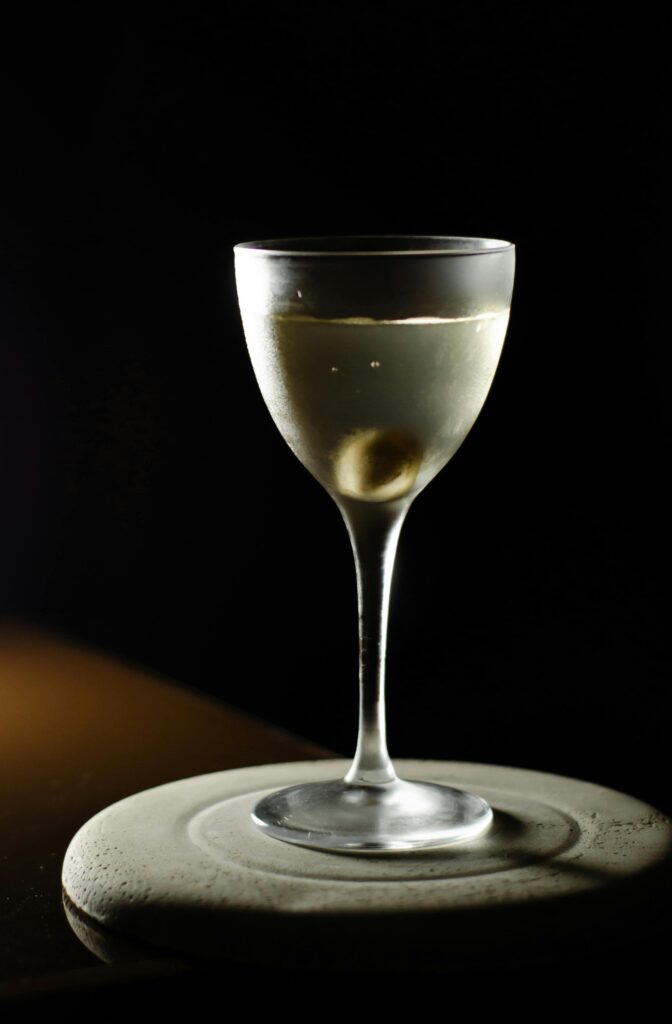
Dry doesn’t mean stronger — it means less vermouth.
A dry martini is a martini made with less vermouth, not a heavier pour of alcohol.
Gin and vodka are already dry by nature. Vermouth is what adds softness and a hint of sweetness. When you reduce it, the drink becomes sharper, cleaner, and drier. That’s the whole idea.
Somewhere along the way, “dry” became shorthand for strong, aggressive, or even vermouth-free. That’s where most of the confusion starts.
So let’s clear it up.
What “dry” actually means in a martini
In cocktail terms, dry refers to sweetness, not alcohol.
In a martini, the only real source of sweetness is vermouth. Change the vermouth, and you change how dry the drink feels.
- More vermouth → softer, rounder
- Less vermouth → cleaner, sharper
When vermouth is removed completely, you don’t get a “very dry martini.”
You get chilled gin or vodka.
That’s not wrong — it’s just a different drink.
Vermouth matters more than people think
Even dry vermouth still has flavor. That’s the point.
It brings lift, shape, and balance to the drink. Without it, a martini loses structure and becomes purely about alcohol and temperature.
Behind the bar, my go-to dry vermouth is Dolin Dry. It’s clean, subtle, and doesn’t overpower the spirit. It supports the drink instead of taking it over, which is exactly what you want in a martini — especially a dry one.
And one thing that matters just as much as which vermouth you use: it needs to be chilled.
Vermouth is wine. If it’s warm or tired, it shows immediately in a martini. At the bar, we keep it cold at all times. A warm splash of vermouth can undo an otherwise perfect build.
Where dryness actually shows up: ratios
This is where dryness becomes real.
- 2:1 (spirit to vermouth)
Soft, aromatic, very classic — not dry - 4:1
Balanced, expressive, still round - 6:1 or 8:1
Clearly dry, crisp, spirit-forward - Extra-dry / vermouth rinse
Minimal vermouth presence
This is also where the term extra-dry martini comes in. It simply means even less vermouth, not a different recipe or stronger pour.
None of these are right or wrong. They’re just different balances.
Gin vs vodka changes how “dry” feels
A dry martini behaves differently depending on the base spirit.
- Gin still carries aroma and complexity, even with very little vermouth.
- Vodka relies more on texture and temperature, so dryness can feel sharper and more direct.
This is why vodka martinis are often pushed very dry — there’s less to cushion the alcohol.
Using a softer, cleaner vodka helps a dry martini feel controlled instead of harsh. If you’re curious how vodka choice affects texture and balance, I go deeper into that in my post on Japanese vodka.
A quick moment from service
At Pink Ivy Kitchen + Bar, I’ve seen this play out countless times.
A guest orders a “very dry martini.” We ask one simple follow-up question — “Do you like vermouth, or just a little?” — and nine times out of ten, the conversation shifts. Once they taste a martini with a measured amount of chilled Dolin Dry, the reaction is almost always the same: surprise.
Not because it’s sweeter — but because it’s more balanced.
That moment is usually when people realize they don’t hate vermouth. They just hadn’t had it used correctly.
A simple way to make a dry martini at home
If you’re experimenting at home, start here:
- 2½ oz gin or vodka
- ½ oz chilled dry vermouth
- Stir with plenty of ice
- Strain into a chilled glass
Taste it.
Next round, cut the vermouth in half and taste again. That comparison teaches you more about dryness than any definition ever will.
A quick note on tools
Dry martinis are about control — temperature, dilution, and accurate measuring.
A simple, well-made bar kit makes this much easier. Something like the Barfly M37101 Basics Cocktail Set gives you:
- Proper shaker tins
- A real jigger (this matters)
- A long bar spoon for clean stirring
- A sturdy strainer
Nothing fancy. Just tools that help you be consistent.
The takeaway
A martini is dry because of vermouth choice and ratio, not because it’s aggressive or stripped down.
Use good vermouth. Keep it cold. Measure it with intention.
Once you understand that, ordering and making martinis becomes much easier. You stop chasing buzzwords and start building balance — which is where a martini actually shines.
Not sure what kind of vodka to use? Check out some of my other posts!
Japanese Vodka: What Makes It Different (and Why It Tastes the Way It Does)
Vodka Explained: How It’s Made, Why It Tastes Different, and What Most People Miss